June 5, 2026

  Blog

Microsoft’s AI Strategy: Platform Control Over Short–Term ROI

My Atlas / Blog

1,206 wordsTime to read: 7 min
by
David Berry

David has over two decades of architecture and delivery experience across Fortune 1000 and public sector enterprises with Avanade, Booz... more

a gold padlock with a microsoft logo and chains covering it

Build 2026 got me thinking, even more than usual, about Microsoft’s AI strategy. 

Microsoft is not trying to win with the shiniest toys (although the Surface RTX Spark looks nice!). It’s working to position itself as the platform leader. Microsoft is building out an operating model, not a product portfolio. And it’s making a bet on the enterprise AI execution layer, not Copilot. 

Why ROI Is the Wrong Lens 

This bet may be surprising given the intense pressure Microsoft is under because Copilot adoption is lagging, CapEx expenditures are historically high and margins are under pressure, begging the question: How will Microsoft make money?  

These questions reflect a short-term view, and Microsoft typically eschews short term gains for long term dominance. Windows, Office and Azure all followed the same pattern: 

  1. Embed into the ecosystem 
  1. Become default infrastructure 
  1. Monetize at scale 

Microsoft’s AI positioning is following the same playbook. Its approach is less about immediate profit and more about building platform lock-in that defines the enterprise for the foreseeable future. So, the lack of ROI at this point is simply a bump on the road towards its long-term strategy. 

What Microsoft Is Actually Building 

To understand the strategy, look at the system, not the products. At Build, Microsoft laid out a layered AI stack: 

  • Compute fabric: edge + cloud infrastructure 
  • Models: first‑party and partner models 
  • Context layer: enterprise data, semantics, knowledge graphs 
  • Runtime: agents executing workflows 
  • Control plane: identity, governance, security 

This architecture was described in the keynote as a cohesive stack — from “compute fabric” to “security, compliance, and governance.”  The key insight is that these capabilities are converging into a coordinated system. Microsoft is endeavoring to define how AI work is executed, not just enabling it. 

From Partnership to Control 

There is also a shift happening under the platform. Microsoft’s initial AI strategy relied heavily on OpenAI. Although that relationship remains important, it’s changing. And its evolving positioning is not about Anthropic.  

At Build, Microsoft showcased seven of its own models and chips, emphasizing that they rivaled their partners on performance and costs. It also debuted new hardware with NVIDIA and Qualcomm, trying to capture the developer and frontline worker experience end-to-end.  

This repeats Microsoft’s pattern of using partnerships to accelerate entry into the market, internalize critical layers and consolidate control over the platform. OpenAI and Anthropic remain critical partners of Microsoft, but Microsoft is moving to reduce dependency on them and step towards controlling the execution environment. 

Where Lock‑In Actually Happens  

Many enterprises think of vendor lock-in in terms of models and APIs. Microsoft’s strategy changes that view by focusing on lock-in on data, identity, governance and workflow.  

Microsoft is building a “context layer” as a first‑class platform component with Microsoft IQ, and specifically the Fabric and Foundry knowledge bases. This defines how enterprise knowledge is structured and accessed for agentic use and extends dependencies beyond traditional storage and databases. 

Agents are being treated as first-class identities, “requir(ing) their own identities, access controls… even when they’re working on your behalf.”  Once agents are provisioned as identities inside Entra (Entra Agent ID), Microsoft controls who or what can act across your enterprise. 

Governance is embedded into the execution layer of agents with Agent 365, Defender and Purview. “(E)very agent…needs to be managed with the same rigor as users, apps, and devices,” according to Microsoft. The potential scale of agents requires platform enforcement and can’t be done by policy alone. 

AI is already being embedded where work happens. Once AI is embedded in Teams and Office workflows, switching platforms is a change in how work gets done across the organization. 

As the keynote emphasized, agents rely on continuous loops of “storing, retrieving, reasoning, acting, and learning” against enterprise data. Once those loops are embedded into your systems, switching vendors is an operational exercise, not just a technical one. 

A New Financial Model: Consumption Over Licenses 

AI also shifts how software is paid for. Software is typically a predictable license cost, but AI is turning that concept on its head as it increasingly is based on variable consumption (tokens, compute, agent activity). Microsoft has made this explicit with its focus on optimization metrics like “tokens per dollar per watt”. 

This change introduces a new set of risks with AI. Consumption based pricing is inherently volatile with little means to predict costs, making budgeting difficult. AI becomes more like cloud compute but potentially a higher order of magnitude because of autonomous agents. This is significant shift in cost management.  

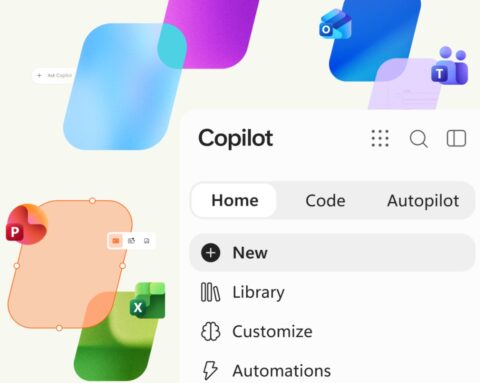
The role of M365 Copilot is perhaps the most misunderstood piece of the puzzle. Microsoft is constantly criticized for Copilot’s lack of adoption However, what matters is not Copilot’s adoption as a standalone product per se, but it’s becoming the universal interface where work gets done — coordinating agents, accessing enterprise context and executing workflows. This aligns with what Microsoft described as moving from chat to “multi‑step tasks” and eventually to autonomous “autopilots” running in the enterprise. 

The Real Executive Decision 

Microsoft is raising the stakes on enterprises who are deciding on an AI stack by embedding its operating model, which pits a “better together” approach against “best of breed.” Customers’ decisions on their vendor of choice can have implications for years to come. 

Choosing Microsoft’s AI platform (and its better together promise) could result in faster deployments, integrated governance and reduced integration hassles but at the cost of reduced flexibility and long-term dependency on Microsoft. This option may appeal to enterprises who benefit from using AI but not building AI. 

Otherwise, enterprises can create their own AI stack with multiple vendors (best of breed). This gives them greater control over architecture and optimization but can lead to integration complexities, uneven governance, and reduced time to value. This choice may be appealing to enterprises whose business model depends on building AI tools and systems instead of just using them.  

What to Watch Next 

Microsoft is trying to define the default enterprise AI platform. Look for continued shifts toward first party control (Microsoft models), enterprise control planes (Agent 365 and Foundry Control Plane), more consumption-based and agent-as-user pricing and the strategic role of Copilot and the coming Copilot “super app.”   

The companies that benefit most from AI will not be those with access to the best models. They will be those that make an explicit, well understood decision about who controls their platform and the long‑term consequences of that choice. 

David has over two decades of architecture and delivery experience across Fortune 1000 and public sector enterprises with Avanade, Booz Allen Hamilton, and EMC. Prior to Directions, David spent ten... more